
Custom water blocks and backplates for the 48GB 4090 Gen 3 PCB
The stock turbo coolers are loud. Water blocks allow you to run your own loop through a chiller or an array of radiators to be as quiet as a mouse. The gen 3 pcb version is very new on the market, it brings its own improvements but nobody has yet made a water block, only one company has ever made a block for the older gen 2 pcb design.
We also improved the design of the stock backplate to give more paths for thermal energy to dissapate back through the PCB aswell as more surface area (as fins) on the rear for heat to dissapate through. We added M3 mounting holes so a 90x90mm fan can be screwed directly onto the backplate to activly cool rear memory modules in single card or pcie riser configurations.
Custom Water Block
Covers the GPU die, all 24 GDDR6X modules, and the entire power-delivery section. Standard G1/4 inlet/outlet. Backplate covers rear of pcb fully to reinforce against pcb flex.
- Material C101 copper cold plate, Type III hard-anodized technical alloy intermediate, stainless steel top.
- Fittings 2× G1/4" threaded ports, inlet/outlet swappable.
- Coolant Clear water-based with corrosion inhibitor. Recipe in the FAQ below.
- Compatibility 48gb 4090 Gen 3 PCB (PG139 / NVIDIA Reference).
- Dimensions 10.5" × 5.5" × 0.75" (card with block installed)
- Radiator Recommended: 360mm (450W) · Ideal: 420mm
Installation Manual
Full installation walkthrough. Please view our video: https://youtu.be/TY8z3toQQEQ. Tap the preview to zoom into the page, or grab the PDF for offline reference.
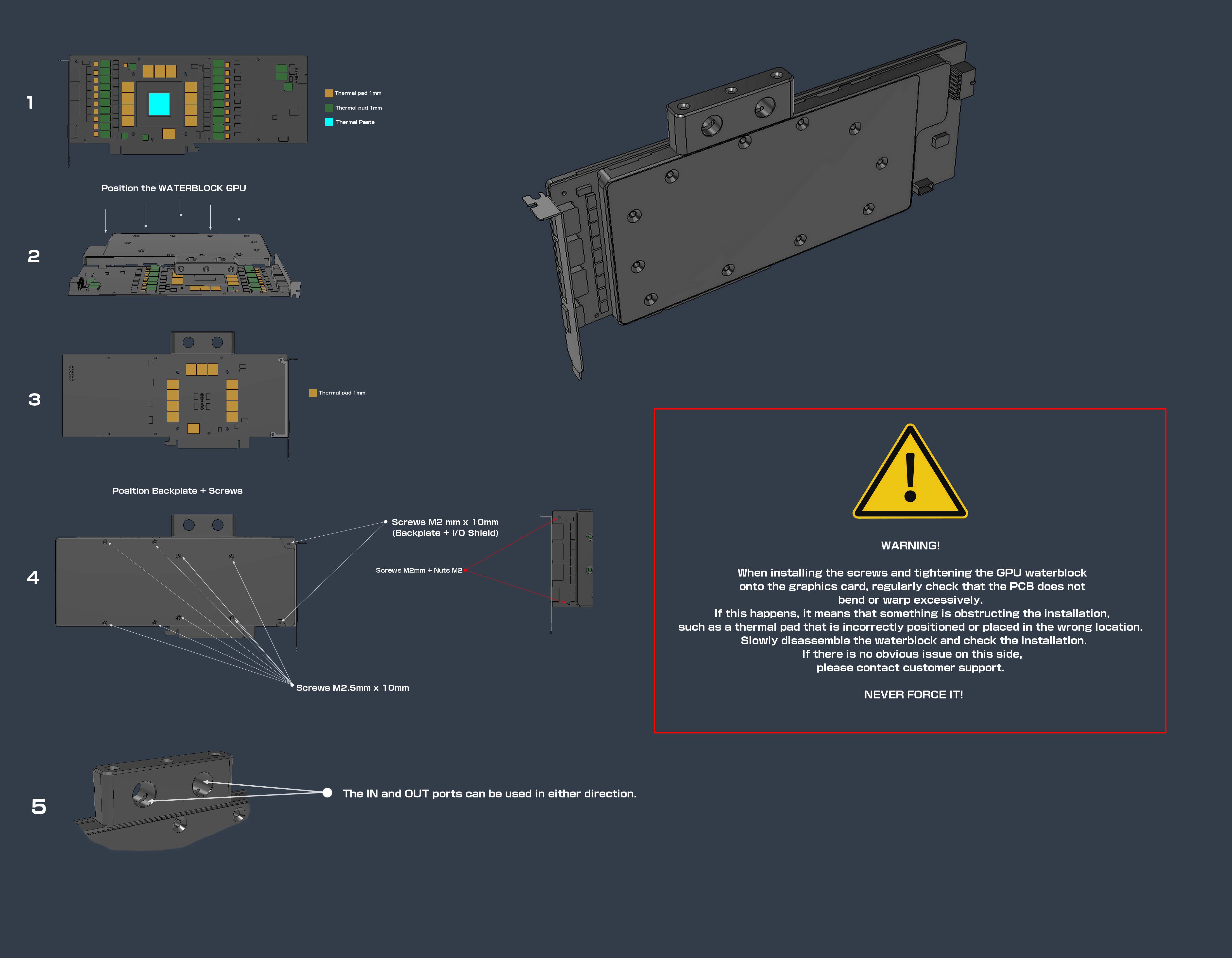
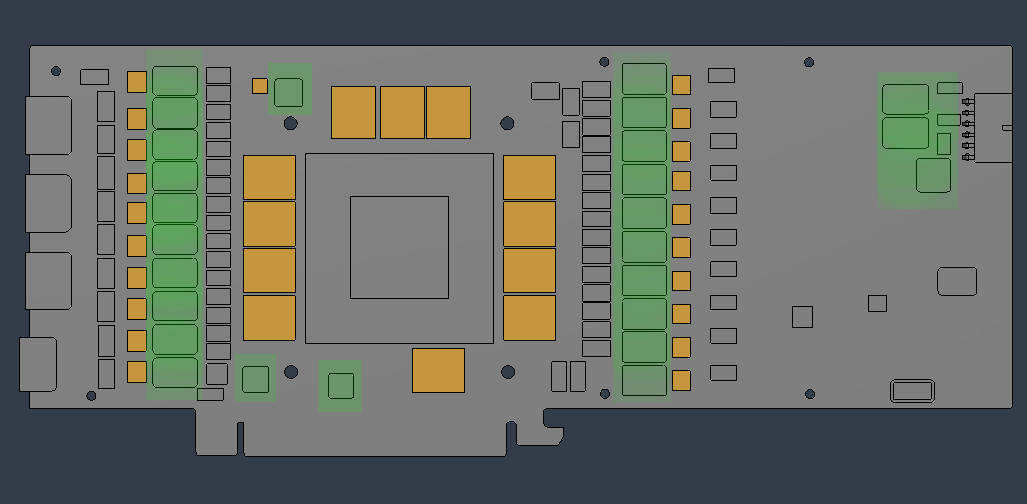
Q. What are the PCB contact points?
Water block
GPU die, all 12 front-side GDDR6X modules, 17-phase VRM, and all inductors.
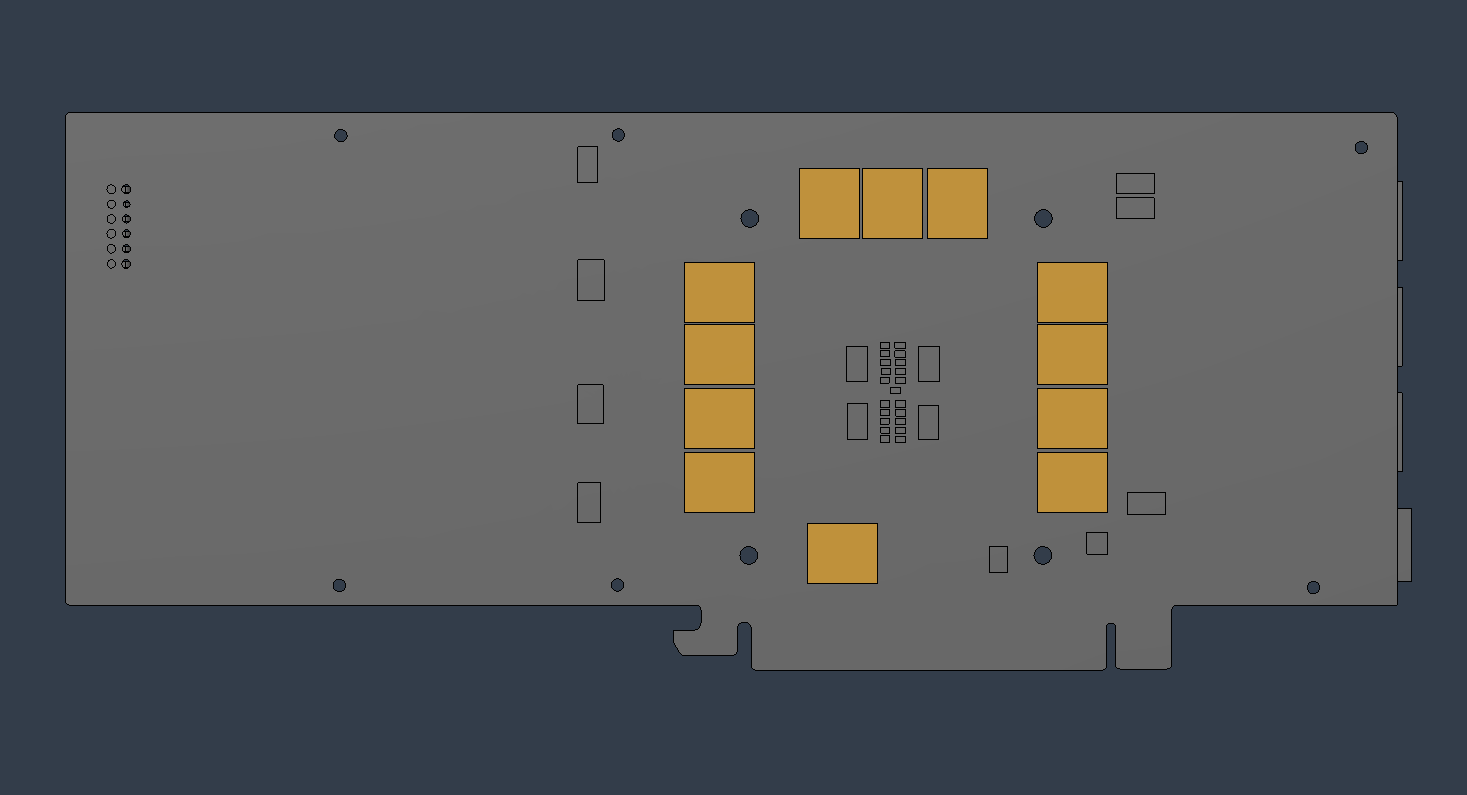
Backplate
All 12 rear-side memory modules. If you paste K5 Pro under where the inductors sit, and scuff the surface to remove the anodization, you can get a slightly better cooling yield on the rear memory modules.
Q. What coolant should I run?
90% distilled water, 10% propylene glycol, plus a drop of silver-based biocide. Always clear coolant with a corrosion inhibitor. The liquid matters more than the metal: a poor coolant will damage any block, even full copper.
Recipe (for 1 L):
- 900 mL distilled water. Distilled, not demineralised, is cleaner and has no residual ions. Supermarket or pharmacy.
- 100 mL propylene glycol, pharmaceutical or food grade (USP/EP). Not ethylene glycol, which is toxic.
- One to two drops of silver-based biocide (any watercooling biocide, or a Sanifluid-type product). A pure silver coil in the reservoir is a passive alternative.
Mix procedure:
- Pour the 900 mL of distilled water into a clean bottle.
- Add the 100 mL of propylene glycol.
- Shake well.
- Add the biocide drops.
- Let it sit 10 minutes before filling the loop.
The 10% glycol ratio is enough to suppress algae and bacteria without tanking thermal performance. Going above 20% hurts cooling for no real benefit at PC temperatures.
Q. Which coolants should I avoid?
Skip anything colored, opaque, or with "special effect" pigments (UV-reactive, pastel, glitter). The pigments break down and deposit inside the block over time, regardless of construction. This applies to every water block on the market, not just ours.
Q. Is this block machined from a full single billet of copper?
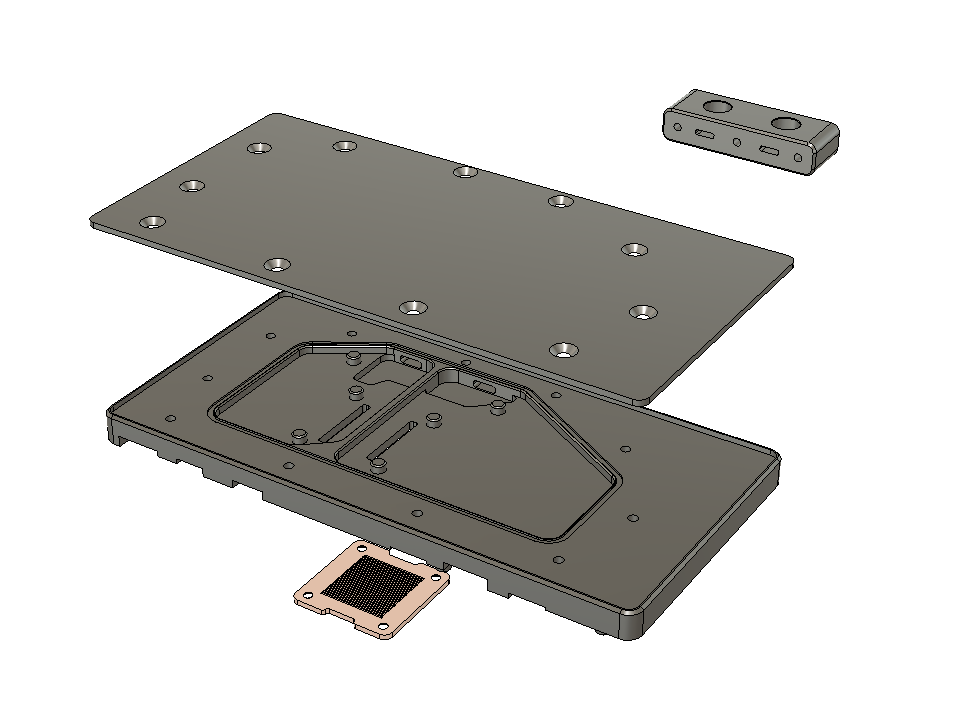
The block uses a hybrid construction, layered for thermal performance up front and structural rigidity behind:
- Middle section: technical 6063-T5 alloy (copper, aluminum, nickel, titanium content), Type III hard-anodized with a glossy black sandblasted finish.
- Top: raw, brushed stainless steel.
- Cold plate: pure C101 copper with passivation, sitting directly on the GPU core where the highest thermal conductivity matters most.
The seals are flat, square-section gaskets, custom laser-cut from elastomer stock. The square cross-section keeps them from slipping out of their grooves under internal pressure. This sealing system has been tested at 8 bar continuously for several months in industrial environments, and is rated to liquid temperatures up to 250 °C.
The anodized middle section is electrically non-conductive at the surface, which helps suppress the conditions that galvanic corrosion needs (see the next question for the full explanation).
Q. Will mixing metals cause galvanic corrosion?
No. The intermediate body is a Type III hard-anodized technical 6063-T5 alloy. The old rule about not mixing copper and aluminum applies to raw, untreated aluminum (mainly cast parts). Modern hard-anodized technical alloys are a different category entirely.
The anodized layer is an electrically insulating barrier that prevents the conditions galvanic corrosion needs. The recommended coolant (above) contains corrosion inhibitors that add a thin protective film on both the copper cold plate and the anodized intermediate surface, covering any micro-defects in the anodizing.
The same construction method has shipped in thousands of GPU water blocks since 2024 (including Zotac's factory-fitted blocks on earlier card generations) without corrosion claims. For independent verification, Astrodyne's 14-month corrosion test of anodized alloy combinations in coolant and tap water is published here: Corrosion Resistance of Anodized Aluminum & Water-Cooled Electronics.
Q. Why doesn't the backplate use every PCB mounting hole?
By design. Water cooling extracts heat directly at the GPU die, VRMs, and memory, so only the mounting points needed for even pressure on those zones are used. Air coolers need more mounting holes because heat spreads further across the PCB through the heatsink and into adjacent components. Water blocks don't have that secondary heating effect, so nearby chips don't need additional clamping pressure.
The essential mounting points are the four around the GPU core, plus the points around the MOSFETs and the lower chips. These provide the right pressure in the right places for thermal contact, without the extra holes an air cooler requires.
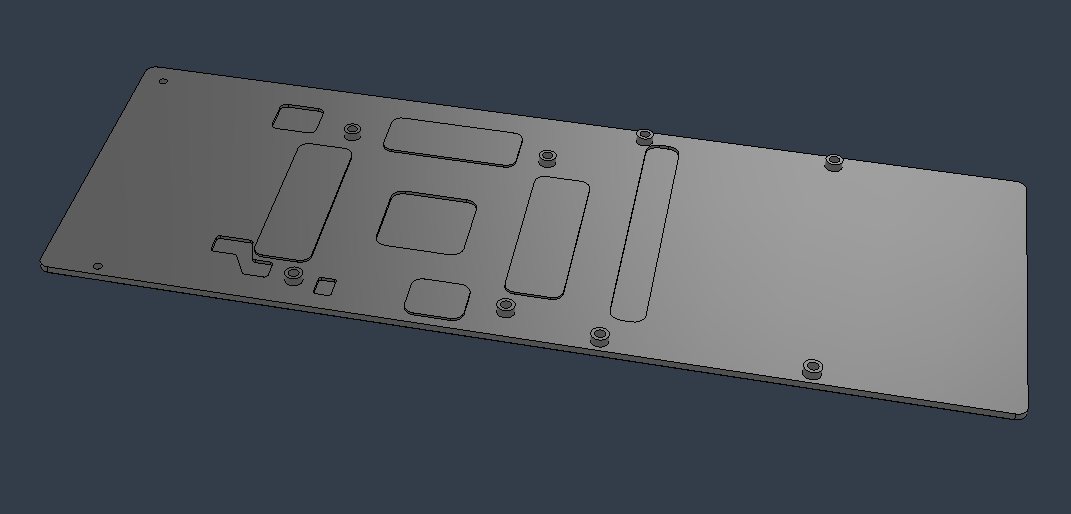
Reinforced Backplate
More pcb contact points, improved heat dissapation, fan mounting holes.
Slightly shorter than the original backplate, allowing the turbo fan a few percent more intake volume on stacked cards. The increased surface area from the fins lets the intake of a card above it activly pull in air over the fins, cooling rear side memory modules. M3 mounting holes are also tapped into the backplate so you can install 90x90mm fans directly when you have the room. More contact points allow the backplate to better thermally equilibriate with the front side active air cooler, reducing ΔT of rear side memory modules, increasing lifespan measurably.
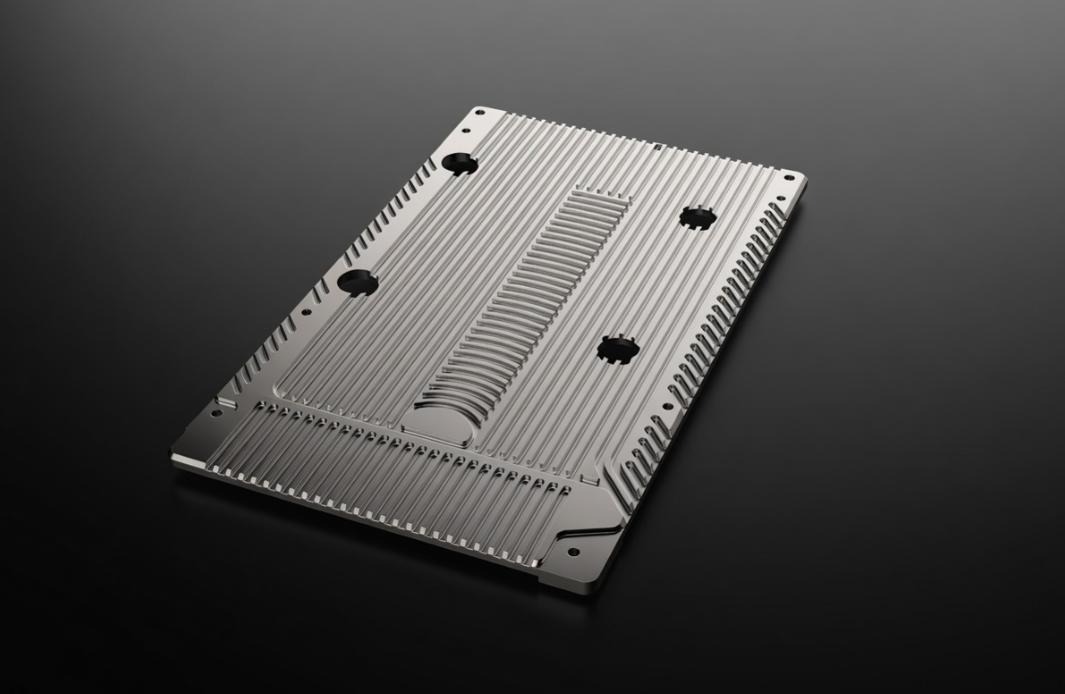
- Material CNC-machined 6061 technical alloy.
- Thermal Interface 0.5mm 6w/mK thermal pads & K5 Pro on pre-installed cards.
- Mechanical Features 82.5x82.5 M3 mounting holes for 90x90mm computer fans to be attached to cool rear side memory modules.
- Compatibility Works with the stock blower cooler or the custom water block. Sold as a standalone option or bundled.
Improved backplate contact areas
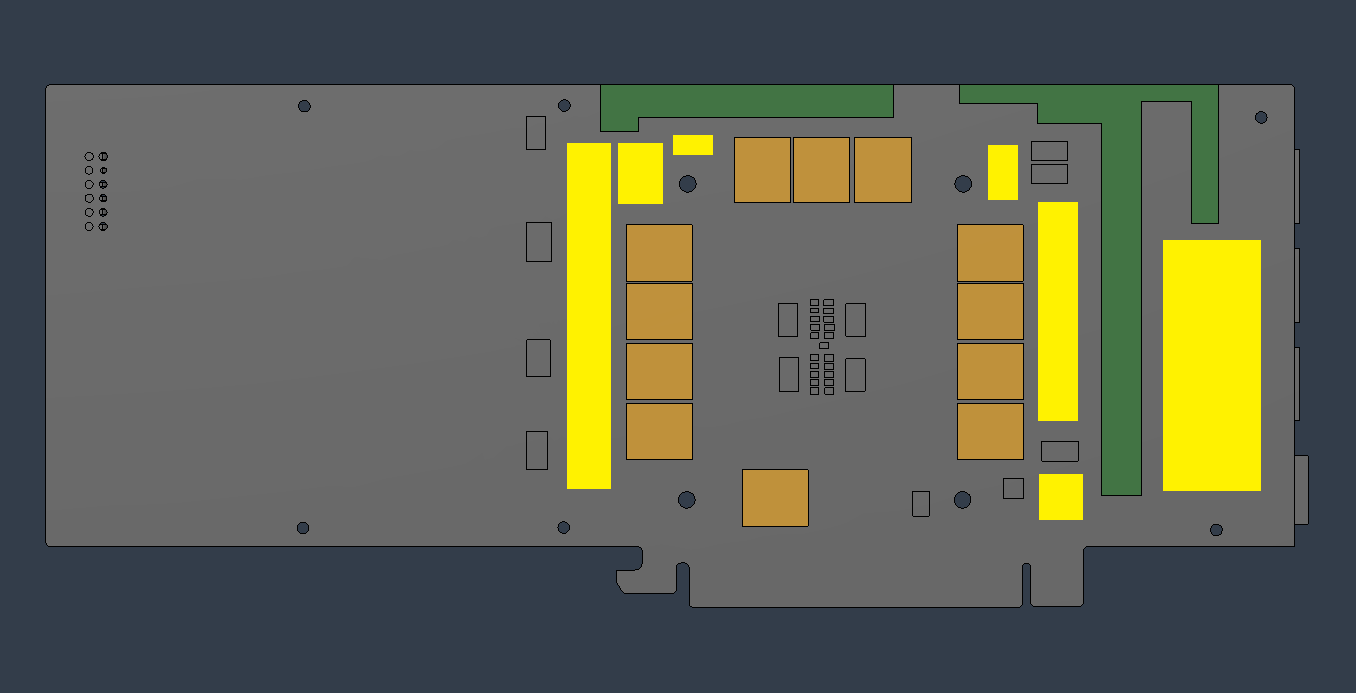
Green and orange: 0.5mm thermal pad contact areas. Yellow: K5 Pro application areas for improved heat distribution.
Measured under sustained load.
Bench numbers and FLIR captures from our 48-hour ComfyUI Wan2.2 burn-in test will land in this section as we finalize the comparison set (stock blower vs. water block vs. water block + backplate).
